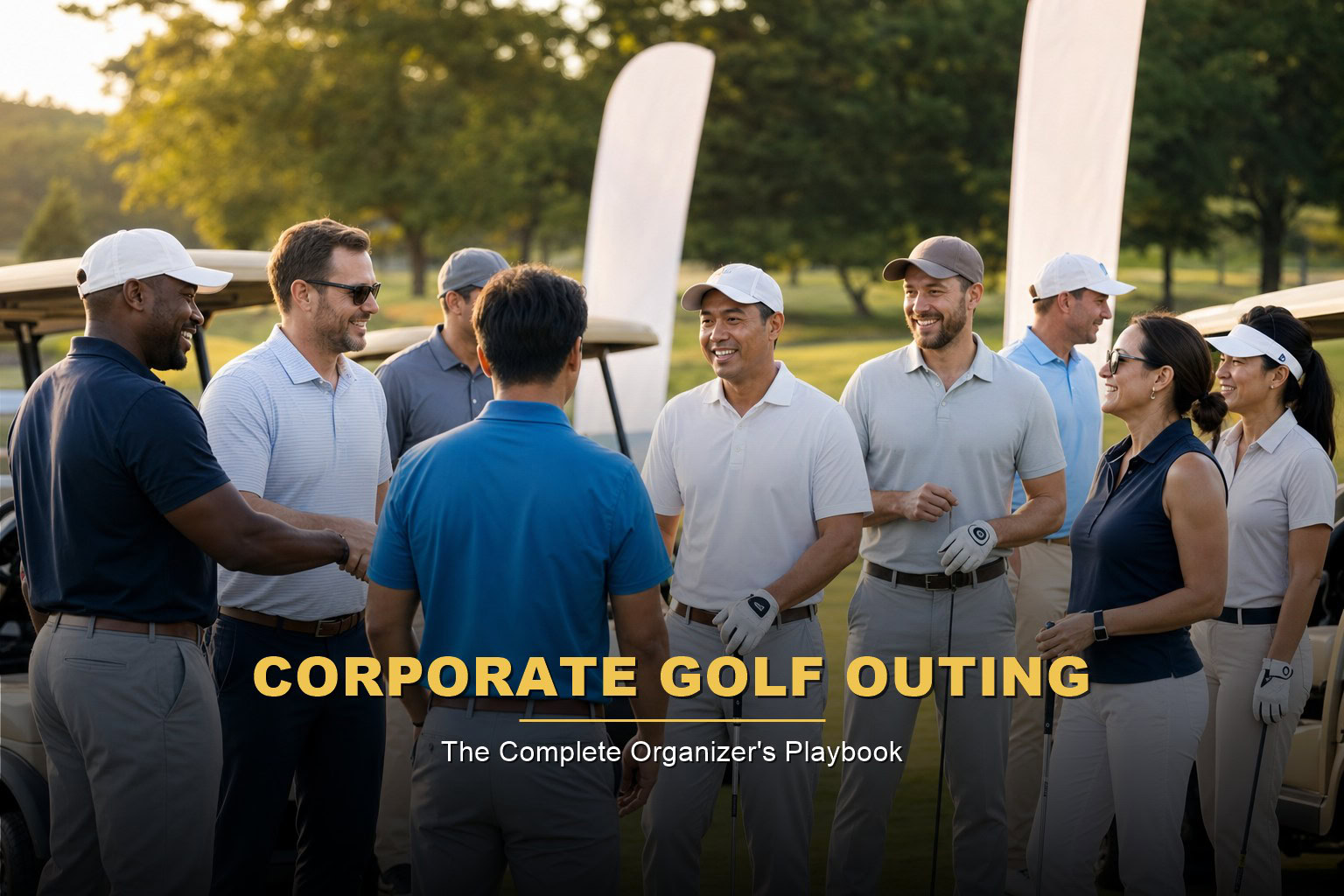
A company blocks off a whole course for a day because a round buys team building that a conference room never will.
Give clients, colleagues, or donors four relaxed hours together and they talk, compete a little, and build real rapport along the way. That is what a corporate golf outing is all about. The golf itself is mostly the backdrop. Companies run them to entertain clients, reward a team, or raise money for a cause.
Because the goal is connection, the golf stays easy and inclusive. A scratch player and someone who has never broken 100 can share a cart and both have a good time. That inclusiveness shapes every choice that follows, from the format you run to how you handle handicaps.
This playbook walks through each part of planning a company golf outing, from budget to gameday, then points you to deeper guides on the pieces that fall between.
Some links in this post are affiliate links. If you buy through them, we may earn a small commission at no extra cost to you.

Start With the Goal, Then Set the Budget
Solidify the purpose before you book anything. A client-entertainment day, an employee-reward outing, and a charity fundraiser look different on the course, and the purpose drives the guest list, the budget, and the tone of the whole event.
- Client entertainment: Smaller field, nicer course, generous gifts, and plenty of face time for your sales team.
- Team building: Mixed departments, an easy format, and prizes that reward the group over the individual.
- Employee reward: Relaxed pace, food and drink front and center, low pressure on score.
- Fundraiser: Larger field, sponsors underwriting holes, and a cause as the focal point.
Once the purpose is set, the budget follows. Most companies underwrite the outing as a marketing or team building expense, or offset it by selling sponsorships. Guests rarely pay their own way at a corporate event, which separates it from a public charity scramble where the entry fee is the fundraiser.
Price the day per player so you can scale the field up or down. A rough all-in figure runs $130 to $200 or more per golfer, depending on the venue. Public courses sit at the low end, and private clubs climb well past it. Our corporate golf outing cost breakdown provides ballpark prices by tier and shows how sponsorships can help carry some of the cost so you get more out of your event.
| Per-player line item | Typical range |
|---|---|
| Green fee and cart | $60 to $120 |
| Lunch and reception | $30 to $50 |
| Tee gift or welcome bag | $20 to $40 |
| Contests, prizes, and signage | $15 to $30 |
| Approximate all-in | $130 to $200+ |
Ask the course about a food and beverage minimum early. Many venues require you to spend a set amount on catering, and that number can move your budget more than the green fee does.

Pick a Format That Fits Every Skill Level
The format decides whether a mixed field has fun or falls apart. For a corporate outing you want something fast, social, and forgiving, which is why the scramble is the default.
In a scramble, every player on a team tees off, the group picks the best shot, and everyone plays from there. A beginner can spray a drive all day and still drop the occasional putt that helps, and the round moves quickly. Our scramble rules and strategy guide covers scoring, team setup, and how to keep it fair.
If you want a little more individual play, a shamble keeps the best-drive start but has each golfer finish their own ball. A simple two-person best ball works well for smaller client fields. For a structured team event that balances ability, the ABCD team format sorts players into four skill tiers so every group carries a mix of skills.
Whatever you choose, keep it a team game. Individual stroke play exposes weak players and drags the pace, which works against the whole point of the day. The tournament golf formats guide lays out each option with the field size and skill spread it suits.
Handicapping If You Want a Real Winner
A pure scramble can crown a winner on raw score, but a field of mixed abilities makes that unfair to the higher handicappers. If the competition matters, use net scoring so a team of weekend players can beat a team of low-single-digit golfers.
For scrambles, most organizers apply a percentage of each player's handicap and combine them into a team allowance, which keeps sandbagging in check. A common setup takes 25, 20, 15, and 10 percent of the four handicaps on an ABCD team, then subtracts the total from the gross.
You do not need official indexes for a casual outing. A rough self-reported number works, and a maximum handicap cap keeps anyone from gaming the field. Our guide to fair handicapping for mixed groups walks through the allowance math and the traps that make an event feel rigged.

Sell Sponsorships to Offset the Cost
Sponsorships are where a corporate outing pays for itself, and where a fundraiser makes its money. Clients, vendors, and partners buy visibility in front of a field full of decision-makers, and the fees cover the course.
- Hole sponsors: A branded sign at a tee, sometimes a tent with snacks or a rep on site.
- Cart sponsors: A logo on every scorecard holder or cart windshield.
- Contest sponsors: A company backs the longest-drive or closest-to-the-pin prize and gets named at the awards.
- Presenting sponsor: Top billing on signage, the banner, and every communication about the event.
Price the tiers so a small vendor can buy a single hole while a partner can put their name on the whole day, and our golf tournament sponsorship guide has the packages, sample price points, and the wording that makes companies say yes.

Invitations and Registration
A clean sign-up process sets the tone before anyone arrives. Send a clear invitation that spells out the date, the course, and the format. Cover the cost or sponsor details and the details about the day too, then make registering simple.
Collect what you need up front so pairings and catering come together without a scramble the week of. Be sure to include the following on your registration:
- Foursome and pairing requests so guests play with the people they came to see.
- Dietary restrictions for the lunch and reception.
- Shirt or gift sizing if you are handing out branded apparel.
- Handicap or skill level if you plan to seed teams.
Set an RSVP deadline about two weeks out so you can lock pairings, order food, and print signage in time.

On-Course Contests and Light Competition
Contests give every group something to play for beyond the team score, and they keep the mood light. Set a few up on marked holes so players know where they are as they arrive.
- Closest to the pin: Have them on the par 3s. The nearest tee shot to the hole wins.
- Longest drive.: Put a movable sign in a fairway that can mark shots. Longest drive in the fairway takes the prize.
- Hole-in-one prize: A big-ticket reward like a car or a cash payout, which is usually covered by hole-in-one insurance.
- Putting or chipping contest: A quick side event near the clubhouse before or after the round.
Keep the stakes fun rather than cutthroat. Aim for a laugh and a photo instead of a rules argument. You can find how to run and price each one in our on-course contest ideas guide.

Prizes, Gifts, and Branded Swag
Corporate outings lean on gifts and swag more heavily than most event types, because the merchandise doubles as branding. Every player usually gets a tee gift or welcome bag at check-in, and the winners take home prizes at the reception. Our golf tournament gifts and swag guide covers tee gifts, welcome bags, and how to brand them without overdoing it. The following are some considerations:
- Branded golf balls, tees, and a divot tool. The practical items players actually use during the round.
- A logo polo, hat, or quarter-zip. Apparel that keeps the brand in circulation long after the event.
- A towel, umbrella, or rangefinder. Higher-tier gifts that work as contest prizes or VIP giveaways.
For team prizes, gift cards, premium gear, and experience packages land better than another dozen golf balls, and our golf tournament prizes and awards guide spells out what to hand out for each place and how to budget it.

Make Room for Non-Golfers and Beginners
Some of your key guests will barely play. A client who has never held a club still wants to feel included, and stranding them undercuts the relationship the day was meant to build. Consider the following:
- A short lesson/clinic with a club pro before the round teaches the basics and loosens people up.
- The scramble format already carries weak players, so pair a beginner with stronger golfers and let them contribute where they can.
- Non-golf options like a spa session, a wine tasting, or simply joining for lunch and the reception give non-players a reason to show up.
Frame the day so non-players have options and allow them to join in on the team building in their own way. Our guide to including non-golfers and beginners has additional ideas and roles for non-players.

The Day-of Agenda and Schedule
A corporate outing runs on a tight schedule so guests know what to expect and the day flows. The launch is a shotgun start, where every group tees off at the same time from a different hole so the whole field begins and finishes together. That matters when an awards reception and a room full of executives are waiting at the end.
| Time | What happens |
|---|---|
| 7:30 a.m. | Registration opens, welcome bags handed out, range warmup |
| 8:15 a.m. | Coffee, breakfast, and a putting contest near the clubhouse |
| 8:45 a.m. | Rules briefing, contest holes explained, carts staged |
| 9:00 a.m. | Shotgun start |
| 1:30 p.m. | Play wraps, lunch and drinks move to the patio |
| 2:30 p.m. | Awards, raffle, closing remarks, and open networking |
The shotgun start guide explains how to stage carts, assign holes, and time the horn so 100-plus players launch cleanly. An awards reception pulls the field back together for food, prizes, and the networking that justifies the budget.
Work backward from the reception when you build the timeline, and lean on our tournament planning checklist and timeline for the schedule from booking the course months ahead to the morning-of setup.
Build in a weather contingency before the day arrives. Ask the course about how they handle rainy day events, and have an indoor backup like a lunch, an awards ceremony, or a short clinic in the clubhouse so a washout does not cost you the networking you planned the event around.
When the Outing Doubles as a Fundraiser
Plenty of corporate outings raise money while they entertain, tying the day to a charity the company supports. It is a clean way to justify the spend and give guests a reason to open their wallets.
The mechanics shift a little when a cause is involved. You add fundraising elements like a raffle, a silent auction, or a straight donation ask, and the sponsorship dollars fund the cause on top of the course. If that is your aim, our guide on how to run a charity golf tournament covers the fundraising side in depth, from setting a goal to reporting the results to your donors.
Corporate Golf Outing FAQ
How much does a corporate golf outing cost per player?
Plan on $130 to $200 or more per golfer all in, which covers the green fee and cart, food, and a tee gift. Public courses land at the low end, and private clubs run higher. The company usually underwrites the cost or offsets it with sponsorships, so guests rarely pay to attend.
What is the best format for mixed skill levels and non-golfers?
A scramble is the standard choice, because the team plays the best shot on every hole, so a beginner never holds the group back and the round stays quick. Layer in net scoring if you want a fair winner across a wide range of abilities.
How far in advance should you plan a corporate golf event?
Give yourself four to six months for a full-field outing. Good courses book their prime dates early, and you need lead time to sell sponsorships, order branded gifts, and chase RSVPs. A smaller client outing can come together in six to eight weeks.
How many players do you need for a corporate golf outing?
There is no minimum, but a shotgun start works best with enough groups to fill most of the course, often 72 to 128 players on an 18-hole layout. Smaller client outings of two to six foursomes usually run a tee-time start instead.
Do players need an official handicap?
No. A casual outing runs fine on self-reported handicaps, or no handicaps at all if you score by team on a scramble. Use handicaps only when you want a fair net winner across mixed abilities, and cap the maximum to keep it honest.

Where to Take It From Here
A corporate golf outing works when the golf stays easy and the day is built around the people. Get the goal, the format, and the schedule right, and the relationships build naturally.